Why Packaging Matters in D2C (And What to Actually Invest In)
Why packaging is one of the highest-leverage investments a D2C brand can make, and where to actually spend your budget.
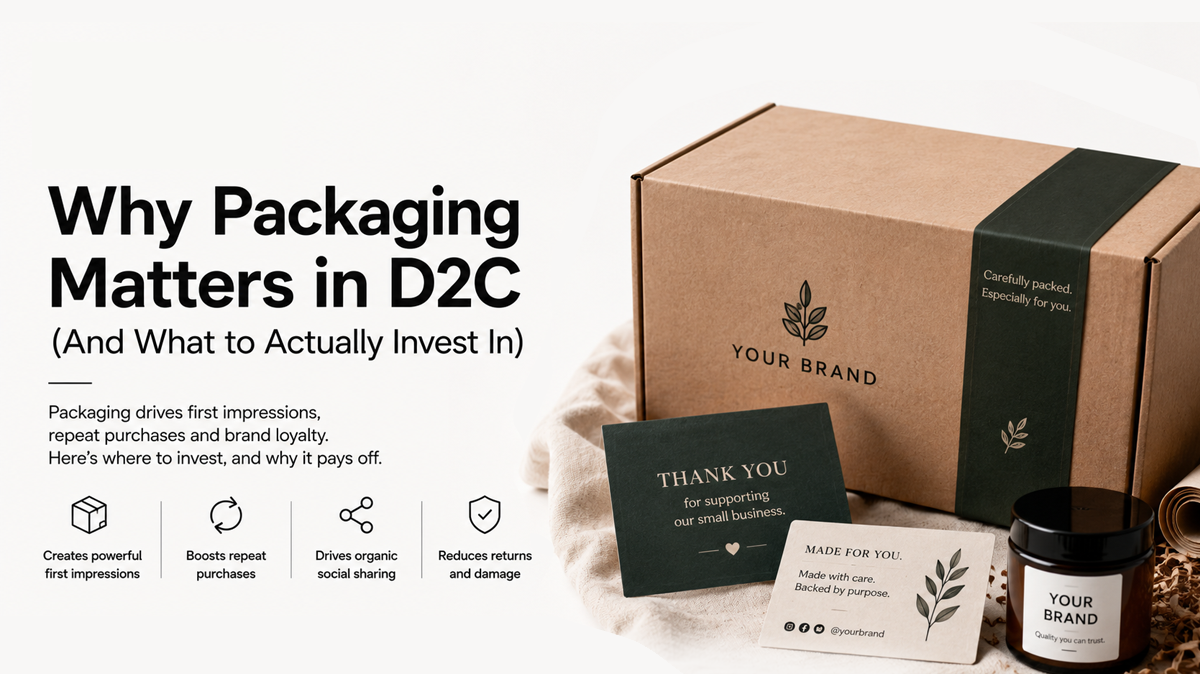
Packaging is the first, and sometimes only, physical interaction a customer has with a D2C brand. Unlike retail, where a customer touches and evaluates a product before buying, a D2C customer commits to a purchase online and forms their entire first impression when the box arrives. Industry research consistently links premium packaging to meaningfully higher repeat purchase rates and organic social sharing, which makes it one of the few line items in a D2C budget that pays for itself directly.
Here's why it matters, and where your money is best spent.
Packaging Is Your Only Physical Touchpoint
In offline retail, a customer can pick up a product, feel its weight, read the label in person, and compare it to the one next to it. Online, none of that exists until the box physically arrives. That single moment carries the weight of your entire brand impression.
This is why unboxing has become a genuine part of the product experience, not an afterthought. Customers form judgments about quality and value within seconds of opening a package, well before they've even used the product.
The Business Case, Not Just the Emotional One
Packaging isn't just about making customers feel good. It has a measurable effect on the numbers that matter to a founder:
- Repeat purchases: Multiple industry studies show premium, well-designed packaging correlates with meaningfully higher repeat purchase rates compared to plain, generic packaging, in some cases by 40% or more.
- Organic reach: A large share of online shoppers report sharing unboxing experiences on social media, turning your packaging into free, earned marketing rather than a pure cost.
- First impression accuracy: Package graphics and structural quality shape a customer's perception of the product before they've even tried it, which means underinvesting here can undercut a genuinely good product.
- Returns and damage: Poor packaging leads directly to damaged deliveries, which drive returns, refunds, and negative reviews, all of which cost far more than the packaging would have.
Packaging, in other words, isn't decoration. It's a lever that affects retention, acquisition cost, and returns all at once.
What to Actually Invest In First
For an early-stage or small D2C brand, budget isn't unlimited, so prioritize in this order:
- Structural integrity first. A beautiful box that arrives damaged does more harm than a plain one that arrives intact. Get this right before anything else.
- Brand identity on the primary touchpoint. Your logo, colors, and core visual identity should be consistent and clean on whatever the customer sees first, even if the rest of the packaging is simple.
- One small, memorable detail. A thank-you card, a handwritten note, a small sticker. This single low-cost addition often drives a disproportionate amount of the emotional response and social sharing.
- Sustainable materials, where your budget allows. A large and growing share of consumers say sustainability influences their purchase decisions, so this is increasingly closer to a baseline expectation than a bonus, especially as your brand scales.
You don't need an elaborate unboxing system to start. Many brands generate strong repeat-purchase lift from a well-printed box, consistent branding, and a single thoughtful insert, long before they can afford custom-molded inserts or premium finishes.
Common Packaging Mistakes Early D2C Brands Make
- Treating packaging as a cost to minimize instead of an investment that affects retention and word-of-mouth
- Inconsistent branding across the outer box, inner packaging, and product label, which undermines the sense of a coherent brand
- Ignoring shipping durability in favor of aesthetics, leading to damaged deliveries and returns
- Skipping barcoding and compliance labeling, which becomes a blocker the moment you try to sell through a marketplace or retail partner
That last point matters more than it seems. Packaging design and compliance (correct HSN codes, GST-compliant invoicing, GS1 barcoding) need to move together, not sequentially, or you'll end up redesigning packaging you already paid for.
Frequently Asked Questions
How much should a small D2C brand budget for packaging design? Early-stage packaging and logo design typically costs between ₹15,000 and ₹75,000 for a freelance or small studio engagement. Physical packaging material costs are separate and scale with order volume.
Does packaging really affect repeat purchase rates? Yes. Multiple independent industry studies consistently link premium, well-designed packaging to significantly higher repeat purchase rates compared to plain or generic packaging.
Should I prioritize sustainable packaging as a small brand? If budget allows, yes. A growing majority of consumers say sustainability affects their purchase decisions, and this expectation is rising, not leveling off.
Where TalamOne Fits
Getting packaging and branding right builds the customer relationship. Getting compliance and invoicing right builds the business behind it. <u>TalamOne</u> handles the second half, GST-aware invoicing, correct HSN codes, and compliance tracking, so while you're investing in how your brand looks and feels, the operational foundation underneath it stays clean and audit-ready.