How to Get Investor-Ready: A Founder's Guide to Onboarding Your First Investor
What "investor-ready" actually means for a D2C founder, and how to build toward it before you start fundraising conversations.
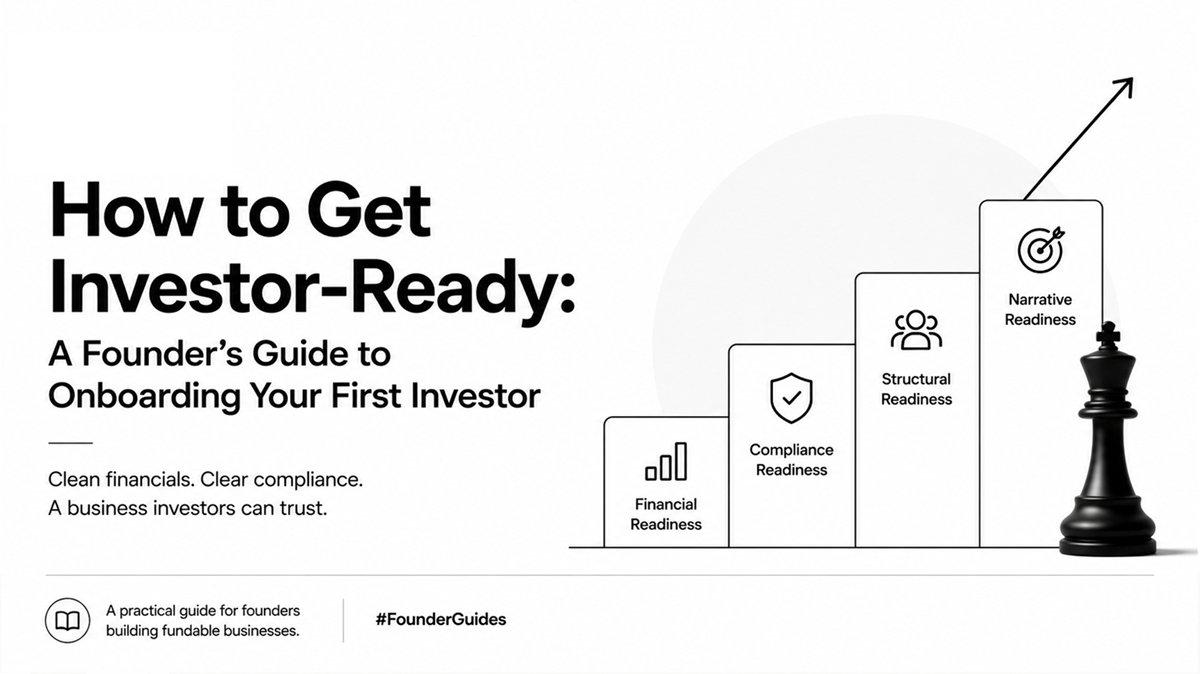
Most founders think investor-readiness means having a good pitch deck. It doesn't. A good deck gets you a first meeting. What gets you a term sheet is whether your business can survive diligence: clean financials, clear compliance history, and a structure an outside investor can actually evaluate without relying on your word.
This guide covers what investor-readiness really means, what to prepare, and the mistakes that quietly kill deals before they start.
What "Investor-Ready" Actually Means
Investor-ready doesn't mean big revenue. Small, early-stage businesses raise money in India every day. What it means is this: an outside person, with no prior knowledge of your business, can look at your records and understand what's happening, without you explaining it to them in person.
That's the whole test. If your numbers, compliance, and structure need you in the room to make sense, you are not investor-ready yet, no matter how big your revenue is.
The Four Pillars of Readiness
1. Financial Readiness
This is where most deals are lost. Investors want to see:
- Clean, consistent bookkeeping, not spreadsheets rebuilt for the pitch
- Monthly revenue and expense trends, not just a single top-line number
- Real margin per unit or per order, after every cost
- A financial history that goes back further than the last two months before you started fundraising
If your books were built to look good for a deck rather than tracked from day one, an experienced investor will usually be able to tell.
2. Compliance Readiness
Nothing stalls a deal faster than a compliance gap discovered mid-diligence. Before you start investor conversations, confirm:
- GST filings are current, with no lapses
- Business registration (LLP, Pvt Ltd, or proprietorship) is properly structured for the round you're raising
- Any category-specific licenses (FSSAI, trademark, Udyam) are in place and active
- There is a clean audit trail for every significant transaction
A gap here doesn't just slow the deal down. It changes how the investor sees your judgment as a founder.
3. Structural Readiness
Investors need to understand who owns what, and how new money fits into that. Before your first serious conversation, know:
- Your current cap table, even if it's simple
- Whether any related-party transactions exist, and how they're documented
- What percentage you're realistically raising for, and what it's worth
- Whether you have any informal verbal commitments (advisor equity, friends-and-family money) that aren't yet documented
Undocumented informal arrangements are one of the most common reasons a term sheet gets delayed or renegotiated after the fact.
4. Narrative Readiness
Once the financials and structure hold up, the story matters. Investors want a clear answer to:
- What problem are you solving, and why now?
- Why will this specific business win in this market?
- What will this money actually be used for, and what does it unlock?
A strong narrative cannot substitute for weak financials. But weak storytelling can absolutely lose a deal that had strong financials behind it.
What Investors Will Actually Ask For
Most early-stage diligence requests fall into a predictable set. Having these ready before you're asked saves weeks:
- Last 12 to 24 months of financial statements
- GST returns and filing history
- Bank statements
- Cap table and existing shareholder agreements
- Registration and license copies
- Key vendor or manufacturing agreements
- Customer or revenue concentration breakdown
Common Mistakes That Kill Deals
- Rebuilding financials right before fundraising, instead of maintaining them continuously. Investors can usually tell the difference.
- Mixing personal and business expenses, which makes real margins impossible to verify.
- Undisclosed related-party arrangements that surface during diligence instead of being flagged upfront.
- Inconsistent numbers across documents, where the deck, the financials, and the data room don't quite match.
- Treating a term sheet as final, without an independent legal review. Term sheets can carry inconsistencies or unresolved clauses that are much cheaper to fix before signing than after.
A quick note on the last point: this article is educational, not legal or financial advice. Always have a qualified professional review any term sheet or investment document before you sign.
Building Toward Readiness From Day One
The founders who move through diligence fastest aren't the ones who prepare hardest right before a raise. They're the ones whose daily operating habits, invoicing, compliance, and record-keeping, were already investor-grade long before anyone asked to see them.
Where TalamOne Fits
<u>TalamOne</u> is a structured execution layer built for exactly this. GST-aware invoicing, compliance tracking, and operations management, kept current from your very first transaction, so when an investor asks for your financial history, it already exists. <u>TalamOne</u> doesn't replace the work of getting investor-ready. It makes sure that work was already happening, quietly, in the background, the whole time.