D2C vs B2B: Which Is Better for Your Business in India?
A balanced comparison of D2C and B2B business models across margins, cash flow, and customer acquisition, to help founders and MSMEs choose the right path.
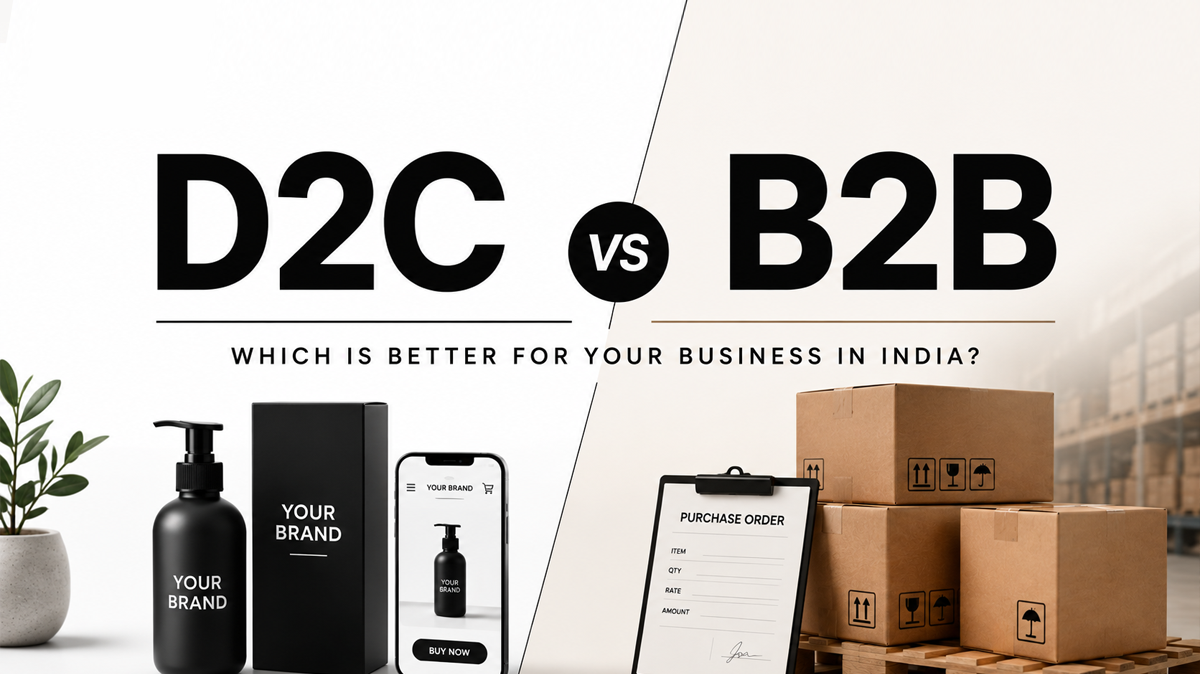
Neither model is universally better. D2C offers higher margins, typically 50 to 70% in categories like fashion and beauty, along with direct customer data and full brand control, but comes with high customer acquisition costs and cash flow pressure from marketing spend. B2B offers steadier cash flow through fewer, larger orders and lower customer acquisition costs, but margins are usually thinner, typically 10 to 30%, and payment terms are often extended.
The right choice depends on your product, your capital, and how much operational complexity you're ready to take on. Here's the honest comparison.
Factor
D2C
B2B
Typical gross margin
50–70% (varies by category)
10–30%
Customer acquisition cost
High, and rising
Lower, but relationship-dependent
Cash flow
Faster (usually prepaid), but marketing-spend heavy
Slower (credit terms, longer cycles)
Order volume vs order size
High volume, small order size
Low volume, large order size
Sales cycle
Short, often instant
Long, negotiation-driven
Data ownership
Full, first-party customer data
Limited, relationship stays with the buyer
Operational complexity
High (fulfilment, returns, support at scale)
Lower per order, but complex on contracts and terms
Why D2C Looks More Attractive Than It Sometimes Is
D2C gets more attention because the margin story is genuinely compelling. When you sell directly, you skip distributor and retailer markups, and the visible brands (skincare, apparel, D2C food) tend to dominate social media and startup coverage.
But the margin advantage is easy to overstate if you don't account for customer acquisition cost. Every D2C sale usually carries a real, and rising, marketing cost attached to it. A product with a 60% gross margin can still lose money per order once ad spend, returns, and fulfillment are factored in. D2C rewards founders who can manage marketing efficiency and operations tightly, not just founders with a good product.
Why B2B Is Often Underrated
B2B doesn't have the same social media presence, but it has real structural advantages for certain businesses:
Fewer, larger transactions mean lower operational overhead per rupee of revenue
Customer acquisition often comes through relationships and referrals rather than paid ads, which lowers CAC significantly
Order volume is more predictable once you have repeat business relationships
The tradeoff is patience. Sales cycles are longer, payment terms can strain cash flow (30, 60, or 90-day credit is common), and building initial credibility with business buyers takes sustained effort, especially without an existing track record.
The Question That Actually Matters: Which Fits Your Business?
Instead of asking "which is better," ask these questions about your specific business:
Do you already have manufacturing relationships or wholesale buyers? If you're an existing MSME supplying to retailers or other businesses, you already understand B2B. Adding a D2C channel can improve margins on a portion of your output without abandoning the stable base you've already built.
Can you fund customer acquisition until repeat purchase kicks in? D2C profitability usually depends on repeat customers, not the first sale. If you can't sustain marketing spend long enough to build a repeat base, D2C cash flow will be difficult early on.
Is your product suited to a direct, branded story? Some products sell well on a brand narrative (skincare, food, lifestyle). Others sell on price, reliability, and bulk terms (raw materials, industrial components, commodities). Match the model to what actually drives your category's buying decision.
How much operational complexity can you handle right now? D2C means managing fulfillment, returns, customer support, and marketing simultaneously, often before you have the team to do all of it well. B2B concentrates complexity into fewer, larger relationships.
You Don't Always Have to Choose
Many MSMEs successfully run both. A manufacturer can continue B2B or wholesale relationships for stable cash flow while testing a D2C channel for a portion of output, capturing better margins on the direct portion without giving up the base. This hybrid approach is often the most realistic path for an existing small manufacturer, rather than an all-or-nothing switch.
Frequently Asked Questions
Is D2C more profitable than B2B?
D2C typically has higher gross margins, but customer acquisition costs are also significantly higher. Net profitability depends heavily on marketing efficiency and repeat purchase rate, not gross margin alone.
Which model has better cash flow?
It depends on payment structure. D2C is often prepaid, which helps cash flow, but requires ongoing marketing spend. B2B usually involves credit terms, which can strain cash flow even when the underlying business is healthy.
Where TalamOne Fits?
Whether you're running B2B, D2C, or both at once, the compliance and financial structure underneath doesn't change: GST-aware invoicing, clean books, and a clear audit trail. TalamOne is built to support exactly this kind of hybrid reality, tracking operations, compliance, and finances in one place, regardless of which channel a given sale came through.